After looking into the work of Armando Iannucci, I looked into Jesse Armstrong, who worked on The Thick of It alongside Armando Iannucci. He is arguably more known for Peep Show which he worked on with his writing partner, Sam Bain – the two also wrote the satirical terrorism film, Four Lions, amongst a number of other successful films and television series’. In an interview with The Mancunian, Armstrong emphasises how important it is to cast the appropriate actors to the script as you are handing them responsibility over deliver a good interpretation of your characters. He describes it as a “joy […] rather than a pain because that’s when they come alive […] they’re on the page and can be a little bit archetypal or stereotypical but when you see an actor doing it that can change.” Therefore when casting, I must ensure that the actors I am choosing are capable of transforming the characters I write into more than just what they are on paper. One of the most successful aspects of the dialogue in these films is bluntness and ignorance of its characters, contrasting with the awareness of others. As well as the additional content provided by the cast, the pair are masters of sarcasm and metaphor which plays very well with their characters. I will be very pleased if I can pull off this level of sarcasm - this will also reflect on who I cast to play my characters, as they will have to come across as sarcastic as well.
In an interview with the Telegraph, the pair argue that your moments in comedy should not come about to be ‘shocking’, the shocking moments must add to the humour of the scene. I have ideas for some scenes that would work for this, not just because they would come across as a shock, but they would add to the comedic value of the scenes. My favourite scene in Four Lions comes as one of the characters accidentally blows himself up (see below) - this comes across as a massive shock on first viewing, but it is perhaps the funniest scene in the film when in context. Four Lions has a very dark tone to it due to the subject matter, and this scene is an example of how the dark humour has come through in one shocking climax.
Armando Iannucci is a Scottish/Italian satirist, writer, director and radio producer, known for co-creating the 'Alan Partridge' character (played by Steve Coogan), and for creating the political sitcom 'The Thick Of It'. He has also created a US-based political sitcom, 'Veep' and more recently released the political satire comedy film 'The Death of Stalin', which follows the power struggle that followed the death of the leader of the Soviet Union, Joseph Stalin, in 1953. I will be focusing on his work as both a writer and a director since I am taking on both of these roles for our major project. Whilst Iannucci is usually lead writer, he also typically takes some producing roles and works on a writing team rather than writing on his own, so I will be able to look into how he writes as a team and as a solo writer. In an interview with Prolifiko, Chris Smith discusses the methods in which Iannucci writes for comedy, with particular reference to The Thick Of It and Veep. He explores team writing, and whilst I am the sole writer for our major project, I will still be bouncing ideas back and forth with Mel and Katie, and Simon will be giving feedback on my scripts, so some of the same principles will apply. Iannucci says "to be a good team writer, you have to be a team player. So no ego. You have to be non-proprietorial about your writing" which applies to my own writing - I must be prepared for some ideas in the script to be criticised and changed.
In a lot of the comedy I watch, I have noticed a trend of the cast members providing improvised lines when shooting, which is something I was keen to delve more into. Iannucci argues that "The right time to improvise is when the actors say ‘Why should we improvise: the script is good’?’ Improvising isn’t there to improve the script: it’s there to bring it out. It’s really a form of dirtying up the dialogue, making it feel more natural and real." Between casting and rehearsals I feel it would be beneficial to keep in contact with the cast for their feedback on the developing script. Therefore when it comes to reading through the script, the cast will have the chance to add their own spin on the dialogue and action that is already there. As Iannucci points out, this will bring forth the natural element that we would like to achieve, contrasting with the absurdity of what happens to the character, which would really boost the humour within the film. Iannucci's 'The Death of Stalin', takes a very similar tone and style to The Thick of It, instead focusing on true historical events (though Iannucci has described the film, not as a documentary, but as a "fiction inspired by the truth of what it must have felt like at the time"). The filming style is very similar, although the lighting and mis en scene is more stylised that The Thick of It with use of dolly shots and more reliance on cutting, likely to fit in with a more cinematic aesthetic. The colour palette is also slightly cool with muted colours to reflect the sombre mood of the historical events it explores. However there is still use of handheld movements to accentuate the humour of each scene. The film takes a very macabre approach to its comedy, which is something I wished to take inspiration from for VET-MAN. In the scene below, we see the Zachistka (clean-up operation) of Stalin's home. The scene is very chaotic and somewhat distressing, and Iannucci uses comedic timing to emphasise the chaos and absurdity of the situation. We do not know who to follow, who is a target, or who is killing the other people in the scene. By juxtaposing the systematic killing with this uncertainty, Iannucci uses a very blunt and dark form of comedic timing to highlight the absurdity of the situation.
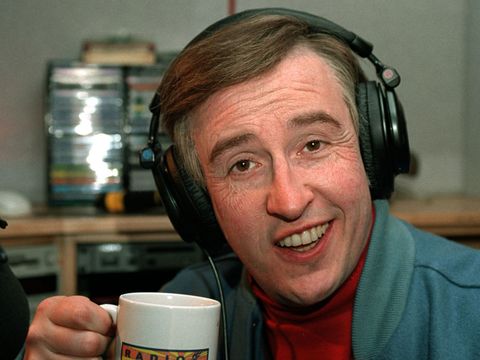
Iannucci is also largely responsible for creating the 'Alan Partridge' character, who is partly my inspiration for Tim. One of the key facets that I would like to pursue with Tim's character is his arrogance and delusion that he is right to an almost sociopathic extent. Alan Partridge is a similar style of character: he is selfish and arrogant of his chances of rebooting his TV series, and other people tend to see straight through him. Alan would stop at nothing to get his show back on the air, in the same way that Tim will stop at nothing to get started as a vet.
We were briefed on the pre-production unit before the summer break, which gave us a lot of time to consider potential ideas and roles moving forward. We had the choice between either a 'Professional' or a 'Major Project' pre-production package, and I feel that it would make more sense for myself and my group to create a pre-production package for our major project. This was because we have slipped up in the past due to limitations with time and planning, so the extra term of planning would allow us to fine-tune our ideas and properly plan out the project. I also decided to take on the role of writer/director, as I did in the 'Transitions' unit last year as I enjoy having the creative control these roles allow for. That left Katie as Director of Photography and Mel as Producer - they will likely share the editing role as well, however we have yet to make a final decision on this. The pre-production unit requires us to create a package outlining the pre-production aspects of our major project, ready for us to go into production after Christmas. We looked at some of the work from last year and we have decided that we would like to create a physical book to display our pre-production work as it felt more professional and refined than a website or other medium. Just to give us an idea of what we will be including in our own work, here is what was included in the contents page from one of the projects from last year's third year students:
STORY:
Synopsis
Character Profiles
Episode Synopses
Script Drafts
British Sitcom Guidelines
Director's Statement
TV Inspirations
Audience
Set Design
Costumes / Sourcing Costumes
Props / Sourcing Props
Character Style
VISUALS:
British Comedy Filming Styles
DOP Statement
Test Shoots
Equipment List
Shot List and Storyboard
Blocking and Camera Positions
Title Sequence
Channel Format & Credit Style
Advertising and Marketing
PRODUCTION:
Broadcasting Overview and Channel
Auditions
Cast
Crew
Locations
Risk Assessments
Call Sheets
Budget
Schedule
We had a few ideas brewing over the summer, but I kept coming back to our transitions unit project, 'Vet-Man'. I really liked the concept back then and I had a lot of ideas for potential scenes and jokes for what could be included in an extended version. I think we, as a group, agreed that we rushed a lot of elements of 'Vet-Man', particularly casting and locations which meant the original concept was not realised how we would have liked. A 10-20 minute piece would allow us to be more ambitious with plot points, which would involve re-writing the characters and expand the story into something much more fleshed-out and entertaining. For example, I had an idea that Dr Stewart had lost his vet license and he tries to establish himself as a 'vet in a van', travelling from place to place attempting to rescue animals but failing in the process, perhaps ending with his arrest. We would aim to present this as a darkly comedic mockumentary, but with more of a single-camera feel rather than trying to replicate the style seen in 'The Supervet' which 'Vet-Man' is based on. This would allow us to re-imagine the story in our own distinct style and push us away from the original concept, making the project more unique. We had a tutorial with Simon, explaining our ideas and he advised us to take a step back with the subject matter; to look at what sort of story we wanted to tell before we thought about specific filming techniques and even which genre we were aiming for. Stripping the idea back, I feel I can best describe my intentions as exploring an absurd and mad character pretending to be something they are not, to which the humour will derive from how the rest of the world sees them. We made a list of TV shows and films to research to help us develop our ideas, which we will research in the coming weeks:

 One of the most successful aspects of the dialogue in these films is bluntness and ignorance of its characters, contrasting with the awareness of others. As well as the additional content provided by the cast, the pair are masters of sarcasm and metaphor which plays very well with their characters. I will be very pleased if I can pull off this level of sarcasm - this will also reflect on who I cast to play my characters, as they will have to come across as sarcastic as well.